
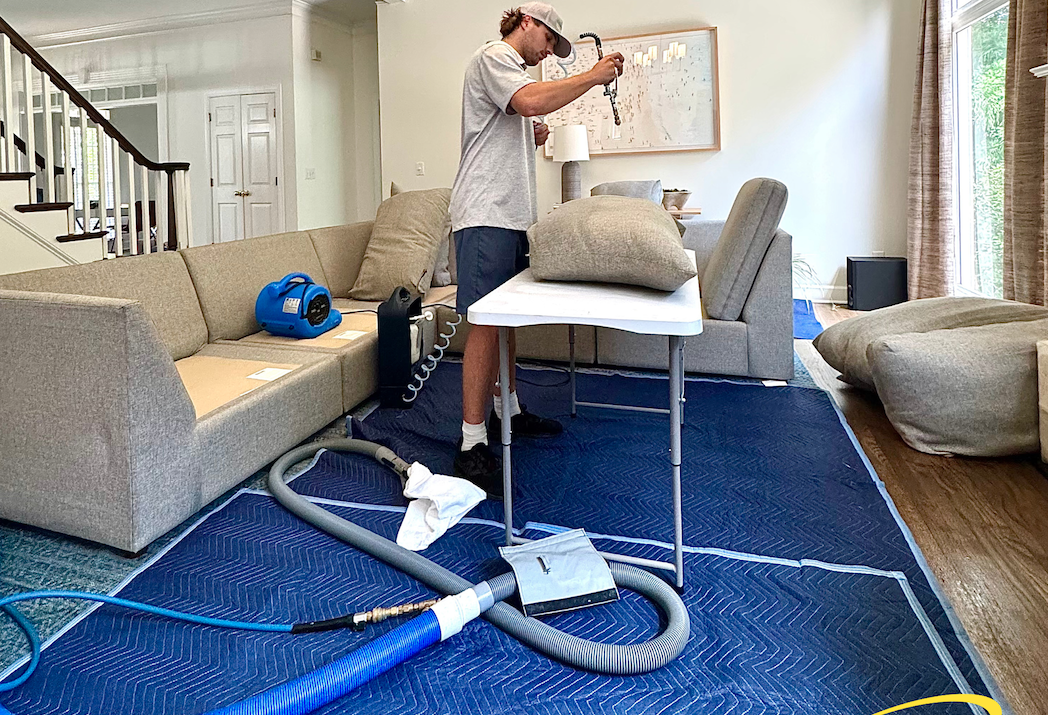
For many households, having upholstered furniture professionally cleaned about every 12–24 months is a reasonable starting point. But there isn’t one schedule that works for every sofa. A home with pets and children may benefit from more frequent cleaning, while a lightly used formal sofa may go longer between professional cleanings.
The condition and fabric of the furniture matter just as much as the calendar.
In this guide, we’ll look at how often to have your sofa cleaned, what factors should influence that schedule, and how to tell when your couch is ready for a professional upholstery cleaning.
How Often Should You Have Your Sofa Professionally Cleaned?
For a typical household, professional sofa cleaning every 12–24 months can be a reasonable general guideline.
That doesn’t mean every sofa needs to be cleaned exactly once or twice a year. Upholstery cleaning frequency depends on how much use the furniture receives and what’s happening in the home.
You may want to consider professional cleaning more frequently if you have:
- Dogs or cats that spend a lot of time on the furniture
- Young children
- Frequent spills or food eaten on the sofa
- Heavy daily use
- Multiple people regularly using the same furniture
- Allergies or sensitivities to household dust
- Noticeable odors
- Visible spots or discoloration
- Light-colored upholstery that shows soil easily
On the other hand, a sofa in a formal living room that is rarely used may not need professional cleaning as often.
The goal isn’t to clean your furniture according to an arbitrary schedule. It’s to maintain it appropriately based on how it’s actually being used.
What Determines How Often a Sofa Needs Cleaning?
Several factors can change how frequently professional upholstery cleaning makes sense.
1. How Often You Use the Sofa
A sofa that’s used every day will naturally accumulate more soil than furniture that’s rarely occupied.
Think about your main living-room couch. If everyone in the family sits on it every evening, that’s a lot of contact over the course of a year.
Body oils, perspiration, dust, and everyday soil can gradually accumulate on upholstery even when the furniture doesn’t look obviously dirty.
High-use furniture generally benefits from more frequent professional cleaning than lightly used pieces.
2. Whether You Have Pets
Pets can make a significant difference in upholstery cleaning frequency.
Dogs and cats can transfer fur, dirt, oils, and outdoor debris onto furniture. Pets that regularly sleep on the sofa can also contribute to faster soil buildup.
Pet accidents create an entirely different cleaning concern.
If your furniture has a persistent pet odor or has been affected by urine, waiting for your next routine upholstery cleaning may not be the best approach. A targeted pet odor treatment may be more appropriate. If you’re dealing with persistent pet odor, our guide to pet odor removal in carpet and upholstery explains what can cause those odors to linger.
3. Children and Frequent Spills
If your sofa doubles as the family snack station, it’s probably going to need more attention than a rarely used piece of furniture.
Small spills don’t always seem significant individually, but repeated food and drink spills can contribute to buildup and staining over time.
If you have children, frequent guests, or simply tend to eat and drink on the sofa, you may find that professional upholstery cleaning every 12–18 months makes more sense than waiting two years.
4. The Color and Fabric of the Upholstery
Some upholstery shows soil much more easily than others.
A light-colored sofa may look dingy relatively quickly even when it is being maintained properly. Darker or patterned fabrics can hide everyday soil for much longer.
But appearance isn’t the only consideration.
Different upholstery fabrics have different characteristics and cleaning requirements. Some are more sensitive to moisture, agitation, or particular cleaning solutions.
That’s why professional upholstery cleaning shouldn’t be treated as simply “washing the couch.”
Before cleaning, the fabric and condition of the furniture should be evaluated so an appropriate cleaning method can be selected.
How Do You Know When Your Sofa Needs Professional Cleaning?
You don’t necessarily need to wait until your sofa looks dirty.
Here are some signs that your furniture may be ready for a professional cleaning.
The fabric looks dull or dingy
One of the easiest signs to notice is a change in the appearance of the upholstery.
High-contact areas such as arms, seat cushions, and headrests may gradually become darker or look less vibrant than they did when the furniture was new.
The sofa has noticeable odors
Furniture can absorb odors from everyday life, including cooking smells, pets, and other sources.
If your sofa smells noticeably different from the rest of the room even after routine vacuuming, professional cleaning may help address accumulated soil contributing to the odor.
If the odor is specifically related to pet urine, a targeted pet odor treatment may be necessary rather than routine upholstery cleaning alone.
You can see spots or stains
Obvious stains are another reason to consider professional cleaning.
However, it’s worth remembering that professional cleaning can’t guarantee that every stain will disappear. Some spills permanently alter dyes or fibers, and older stains may have chemically changed the material.
A professional cleaning can often improve the appearance of soiled upholstery, but the outcome depends on the stain, fabric, and any previous cleaning products or attempts on the stain.
The arms and cushions feel different
High-contact areas can accumulate body oils and soil over time.
You may notice that the arms, seat cushions, or other frequently touched areas feel slightly different from less-used portions of the sofa.
This can be a sign that the upholstery has accumulated more soil than regular vacuuming is removing.
Does Vacuuming Replace Professional Sofa Cleaning?
No—but regular vacuuming is still one of the best things you can do for your upholstery between professional cleanings.
Vacuuming can remove loose dirt, dust, crumbs, and pet hair from the surface and crevices of the furniture.
What it doesn’t necessarily remove is soil that has become embedded in the fabric or absorbed into areas that aren’t accessible to a normal household vacuum.
Professional upholstery cleaning uses specialized equipment and cleaning methods to address soil that routine maintenance can’t fully remove.
Think of vacuuming as regular maintenance and professional cleaning as a deeper cleaning step.
How to Maintain Your Sofa Between Professional Cleanings
A good maintenance routine can help keep your sofa looking better between professional cleanings.
Vacuum regularly
Use an appropriate upholstery attachment to remove loose dust, dirt, crumbs, and pet hair.
Pay particular attention to:
- Seat cushions
- Cushion seams
- Under cushions
- Armrests
- Crevices
- Areas where pets like to sleep
Address spills promptly
The longer a spill remains in upholstery, the more opportunity it has to penetrate the fabric.
If something spills, gently blot the area rather than aggressively scrubbing it.
Scrubbing can spread the spill and potentially damage the fibers.
Follow the manufacturer’s care instructions
Before using any cleaning product or method on your sofa, check the manufacturer’s care information.
Upholstery fabrics are not all cleaned the same way, and a method that’s appropriate for one fabric may not be appropriate for another.
Rotate cushions when appropriate
If your sofa’s cushions are designed to be rotated, doing so can help distribute everyday wear more evenly.
This won’t replace professional cleaning, but it can be part of good overall furniture maintenance.
Keep pets’ bedding clean
If your dog or cat spends a lot of time on the sofa, keeping their bedding clean can help reduce the amount of dirt and odor transferred onto your furniture.
Can You Clean Your Sofa Yourself?
There are plenty of DIY upholstery-cleaning methods online, but that doesn’t mean every sofa should be treated the same way.
The biggest consideration is the upholstery itself.
A sofa’s fabric, construction, backing, cushion materials, and manufacturer’s care instructions all affect what cleaning method is appropriate.
Over-wetting upholstery can also create problems, particularly if the furniture isn’t able to dry properly.
For that reason, it’s important to know what you’re cleaning before applying water, cleaning solutions, or extraction equipment.
If you’re unsure what type of cleaning your sofa needs, professional upholstery cleaning can take some of the guesswork out of the process.
What Happens During Professional Sofa Cleaning?
Professional upholstery cleaning isn’t simply a matter of spraying cleaner on the furniture and extracting it.
The process should begin with evaluating the furniture.
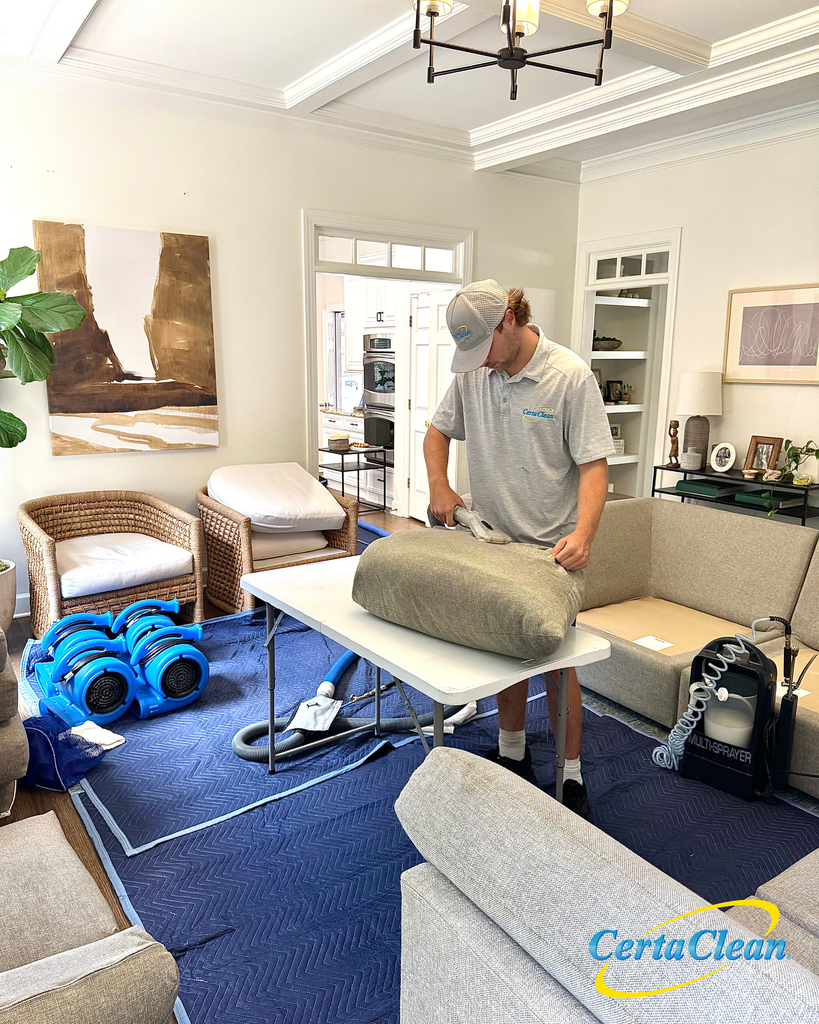
At CertaClean, we look at the upholstery fabric, construction, condition, and areas that need the most attention before determining an appropriate cleaning approach.
Depending on the furniture, the process may involve:
- Inspecting the upholstery to identify the fabric and condition.
- Preparing the furniture and surrounding area.
- Selecting an appropriate cleaning solution and method.
- Cleaning the upholstery using a process suited to the material.
- Addressing spots and areas of heavier soil as appropriate.
- Extracting moisture and suspended soil from the upholstery.
- Allowing the furniture to dry properly.
Not every sofa should be cleaned using the exact same process.
That’s particularly important with delicate fabrics or furniture that has unusual construction.
Does Professional Sofa Cleaning Remove All Stains?
This is an important expectation to set before cleaning.
Professional upholstery cleaning can remove a significant amount of accumulated soil and may improve the appearance of many spots and stains, but it cannot guarantee that every stain will disappear.
Some stains cause permanent changes to the dye or fibers. Others may have been exposed to previous cleaning attempts or chemicals that changed the material.
The age of the stain, the type of substance involved, the fabric, and the amount of time the stain has been present can all affect the outcome.
A good upholstery cleaning company should evaluate the furniture and give you realistic expectations rather than promising that every stain will come out.
Should You Clean Your Sofa Before or After Moving?
If you’re moving into a new home, professional sofa cleaning can be a convenient time to have your furniture cleaned.
The same applies when you’re moving out.
Cleaning furniture before it goes into a new space can help remove accumulated household soil before it comes into a freshly cleaned home. However, we usually recommend waiting until the move process has ended since your furniture could pick up some soiling and smudges while being transported to your new home.
It’s also worth considering professional upholstery cleaning when preparing a home for sale. Clean, well-maintained furniture can contribute to a more polished overall appearance during showings, although cleaning cannot correct permanent wear or damage to the upholstery.
When Is Professional Upholstery Cleaning Most Appropriate?
You don’t need to wait for your sofa to look extremely dirty before having it professionally cleaned.
Professional sofa cleaning may be appropriate when:
- It’s been a year or two since the last professional cleaning
- Your sofa gets heavy daily use
- You have pets
- You have young children
- The furniture has visible spots or discoloration
- The upholstery looks dull or dingy
- The furniture has developed an odor
- You’re preparing for guests or a special event
- You’re moving into a new home
- You’re preparing to sell your home
- You simply can’t remember the last time it was professionally cleaned
For heavily used household furniture, an annual or every-other-year cleaning schedule can be a practical starting point.
But if your sofa has a specific problem—such as pet urine, a significant spill, or a persistent odor—it’s better to address that issue when it occurs rather than waiting for the next routine cleaning.
Professional Sofa & Upholstery Cleaning in Athens, GA
CertaClean provides professional upholstery cleaning for sofas, couches, sectionals, chairs, and other upholstered furniture throughout Athens and surrounding Northeast Georgia communities.
We serve homeowners in Athens, Watkinsville, Oconee County, Statham, Winder, Hoschton, Braselton, Gainesville, Greensboro, Jefferson, Bogart, and nearby areas.
Whether your sofa needs a routine refresh or your favorite chair has accumulated years of everyday soil, our professional upholstery cleaning service can help refresh your furniture with a cleaning process selected for the specific piece.
Final Thoughts
There isn’t a universal rule that says every sofa needs to be professionally cleaned at exactly the same interval.
For many homes, every 12–24 months is a reasonable starting point, but pets, children, heavy use, spills, fabric type, and the condition of the furniture can all change that timeline.
In between professional cleanings, regular vacuuming and prompt attention to spills can go a long way toward maintaining your upholstery.
And when your sofa starts looking dingy, smelling different, or simply doesn’t look as fresh as it used to, it may be time for a deeper clean.
If you’re not sure whether your sofa is ready for professional cleaning, CertaClean can evaluate the furniture and help you determine what type of cleaning it may need.
Frequently Asked Questions About Sofa Cleaning
How often should you have your sofa professionally cleaned?
For many households, professional sofa cleaning every 12–24 months is a reasonable starting point. Homes with pets, children, heavy furniture use, or frequent spills may benefit from more frequent cleaning.
How often should you clean a couch if you have pets?
If pets spend a lot of time on your furniture, you may want to consider professional upholstery cleaning about once a year or as needed based on the condition of the sofa. Pet accidents or persistent odors should be addressed separately rather than waiting for routine cleaning.
Is professional sofa cleaning worth it?
Professional cleaning can help remove accumulated soil that routine vacuuming cannot, while also refreshing the appearance of upholstered furniture. Whether it’s appropriate depends on the condition, fabric, and amount of use your sofa receives.
Can professional upholstery cleaning remove stains?
Professional cleaning can improve or remove many types of surface soil and stains, but not every stain can be completely removed. Results depend on the type and age of the stain, the upholstery fabric, and whether the fibers or dyes have been permanently affected.
How often should you vacuum your sofa?
Vacuuming your sofa regularly—particularly high-use areas and spaces beneath cushions—can help remove loose dirt, dust, crumbs, and pet hair between professional cleanings. Homes with pets may benefit from vacuuming more frequently.
Can I steam clean my sofa myself?
Not necessarily. Whether a sofa can be steam cleaned depends on its fabric, construction, manufacturer’s care instructions, and the amount of moisture the material can safely tolerate. Using an inappropriate cleaning method can damage upholstery or create drying problems.
How long does professional upholstery cleaning take to dry?
Drying time varies depending on the fabric, cleaning method, amount of moisture used, ventilation, temperature, and humidity. Your cleaning professional should provide guidance based on the specific furniture being cleaned.
Does sofa cleaning remove pet odors?
Professional upholstery cleaning can help remove soil, but persistent urine odor may require a targeted pet odor treatment. If urine has penetrated deeply into cushion materials, complete odor removal may be more difficult.